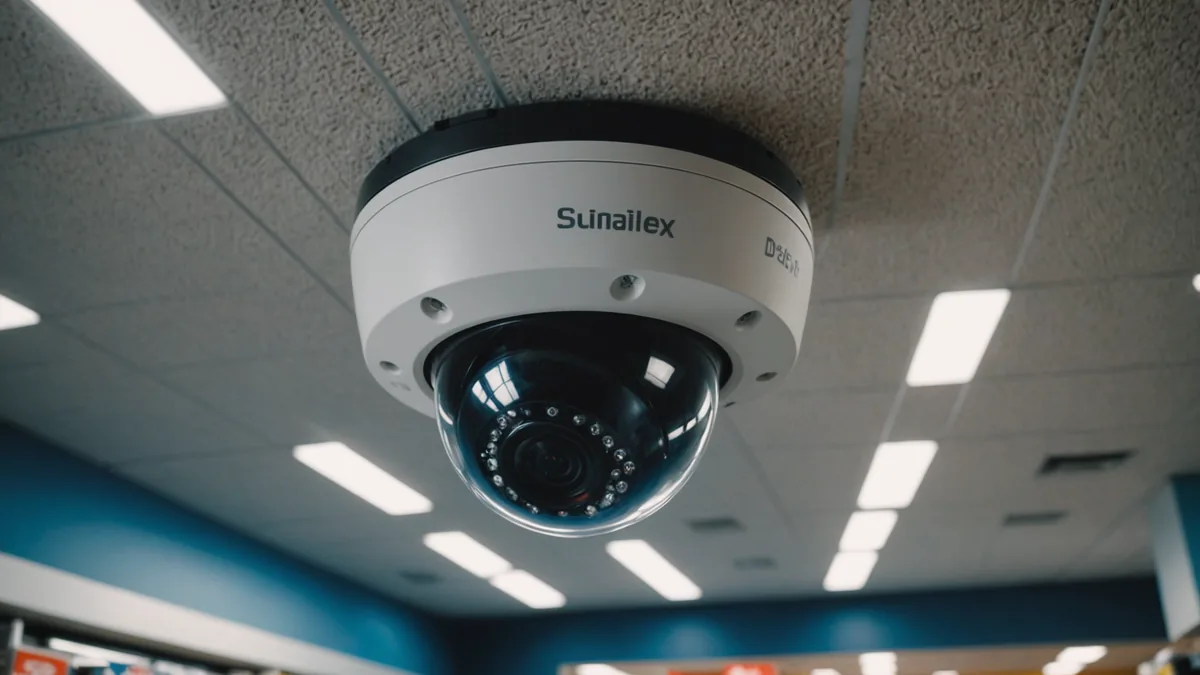
At one 18-store regional chain, every location had cameras installed in 2022 for loss prevention. The footage stayed on local DVRs, and the only regular reviewer was the security contractor. Store operations never received a restock alert, a shelf-fill report, or a compliance score from any of those cameras.
I have seen versions of this pattern repeatedly. Retailers have invested heavily in CCTV and IP cameras, often covering the selling floor, entrances, stockrooms, and checkout areas. The cameras are working. They record. They can be reviewed when something goes wrong.
But for most of the trading day, they are operationally dark.
That phrase does not mean the cameras are switched off. It means the business is not receiving the information those cameras could provide. A camera may see an empty shelf for hours without anyone in the operations team knowing. It may capture a display that has drifted from the planogram without creating a task. It may show repeated customer activity around a missing product, while the next restock cycle continues as if nothing happened.
The problem is not a lack of visibility. Retailers already have plenty of it. The problem is that the infrastructure was built to preserve footage for security review, not to turn live store conditions into operational decisions.
The cameras belong to one function, while the problems belong to another
Camera systems are usually procured, configured, and managed by security or loss prevention teams. That makes sense for their original purpose. LP needs evidence after suspected theft, a record of an incident, or a way to investigate access to a restricted area. The network, storage, permissions, and retention policies are designed around those requirements.
Operations managers work differently. They care about whether a shelf is full at the right time, whether a promotion is set correctly, whether a store is following the agreed planogram, and whether a replenishment task has been completed. Their systems are built around shifts, exceptions, tasks, and store performance.
In many chains, those two worlds barely meet. The footage sits behind a security login. The operations team has a retail management system, workforce tools, and merchandising reports, but no practical way to ask what the cameras are seeing. A store manager may know that cameras cover the aisle. That does not mean the camera can tell the manager that a high-demand shelf has been empty since the last restock cycle.
This separation is structural. It is not usually the result of one team refusing to cooperate. The systems were purchased for different jobs, by different stakeholders, with different definitions of a useful output.
Review begins after the business already has a problem
Traditional footage review is reactive by design. Something happens first. A product goes missing, a complaint arrives, a suspected incident is reported, or a manager notices an unexplained variance. Someone then searches the recording, often across multiple cameras and a long time window.
That workflow is useful for investigation. It is not a practical way to run a store.
There is no routine process for asking a security system to watch a shelf zone proactively during trading hours and notify the right person when availability drops. There is no natural workflow that turns a visual change into a restock task. Motion detection may identify movement near an entrance or restricted door, but motion is not the same as an operations event.
The distinction matters. A camera can record a customer standing in front of an empty shelf. A security platform can retain that moment. Neither action tells the replenishment team that the shelf needs attention now.
By the time a human reviews the footage, the missed sale may already be part of the day’s results. The display may have remained incomplete through a busy period. A compliance issue may have repeated across several locations before anyone had a reliable way to see the pattern.
The volume makes human review the wrong operating model
Consider a 20-store chain with 10 cameras per store. That is 200 camera feeds producing thousands of hours of footage each day. Even a small review window becomes a significant labor commitment. Reviewing every shelf, every display, and every trading period by hand is not economically viable.
Retailers therefore review selectively. They look at incidents, complaints, and exceptions that have already been identified. This is sensible from a security perspective, but it leaves most routine operational conditions unexamined.
The issue is not that people are unwilling to look. It is that footage is a poor interface for a high-frequency operational decision. A store manager does not need 45 minutes of video from an aisle. The manager needs to know which location requires attention, what condition was detected, and whether the issue is recurring.
Without a processing layer, the camera produces data faster than a retail team can consume it. More cameras can then create more storage and more possible review work without creating more operational awareness.
A recording is not an operations-language output
Security systems are good at storing visual evidence and generating alerts for defined security events. Their outputs are generally recordings, access notifications, motion events, and investigation tools. Those outputs do not map naturally to the language used in store operations.
An operations manager needs signals such as:
- A shelf-fill condition has fallen below the expected standard.
- A product area appears out of stock during a trading period.
- A display does not match the approved planogram.
- A recurring issue needs review at a particular store or zone.
Those signals are not simply security alerts with different labels. They require the system to interpret what is visible, connect it to a store zone or merchandising expectation, and present the result in a form that fits an existing operating rhythm.
This is why installing more cameras does not, by itself, create store intelligence. The raw feed is only the starting point. The useful output is an exception that a person can understand and act on without opening a video timeline.
The network gap is real, even when both systems are in the same building
There is also a technical boundary between the camera network and the operations stack. Security cameras may sit on a separate VLAN or subnet. Video may be managed through an NVR or DVR that was configured for retention and controlled access. Retail management systems may run elsewhere, with their own permissions and integration rules.
The result is a physical store in which two kinds of information exist side by side but do not communicate. The camera sees the shelf. The operations system contains the task or planogram context. Neither system was necessarily designed to exchange the relevant information.
Closing that gap does not require sending store footage outside the network or asking operations teams to become security-system specialists. It requires a layer that can read feeds from existing ONVIF cameras, process the relevant visual conditions, and return concise signals in operations language.
Seeing the problem is not the same as fixing it
This distinction is important. Camera analytics can close the footage review gap. It can help a retailer detect an empty shelf, identify a possible compliance issue, or route an exception to the right store team. It cannot solve every operational problem that follows.
If the restock crew is understaffed, faster alerts do not create additional labor. If the supply chain is unreliable, detecting an out-of-stock event does not make the missing product available. If a store has poor task discipline, another notification may not lead to completion. The gap between seeing a problem and fixing a problem is still a human process.
The value is in making that process more informed and more timely. A team should not have to discover every shelf issue through a walk, a customer complaint, or a retrospective review. It should be able to start with a prioritized view of what the cameras have already observed.
This is the conviction that led us to build Youtiligent. The missing capability is not another camera system and not a request for people to watch more footage. It is a translation layer between existing security infrastructure and store operations, one that turns camera feeds into signals such as fill rate, compliance score, and restock alert while keeping the processing within the retailer’s network.
Talk to Avichai and the team if you are looking at a store full of cameras and asking why so little of what they see reaches operations. The gap is structural, but it is solvable when the camera speaks the language of the work.
Back to Store Ops Insights