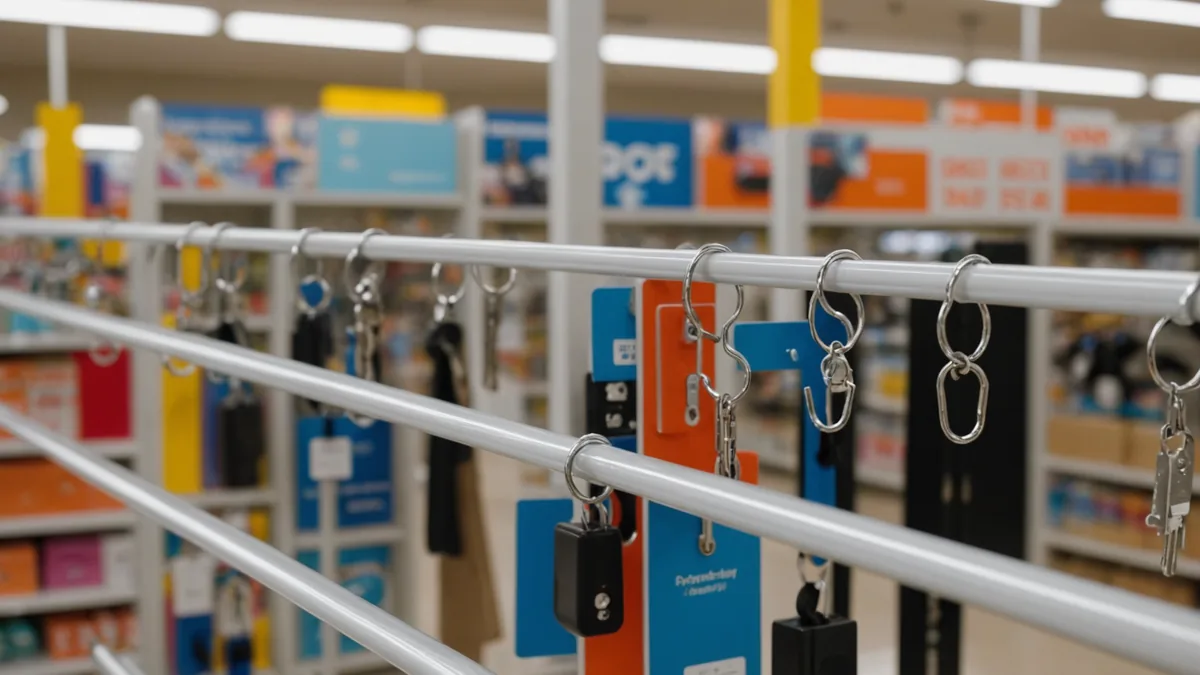
By the time a security tag alarm sounds at the exit, the loss decision has usually already been made at the shelf.
The exit is where a store may detect an event. It is rarely where the event begins. A product is selected, concealed, abandoned, or left behind several minutes earlier, often in a zone where the store is already managing another operational problem. That is why loss prevention should be treated as an inventory and operations issue before it is treated as a security-gate issue.
The practical question is not only, “Did this item leave the store?” It is also, “What happened at the shelf before the item moved toward the exit?” Shelf intelligence helps answer that question through zone conditions and patterns, without asking a team to watch hours of footage.
The shelf often reveals the conditions behind the loss
Out-of-stock conditions and loss events can look like separate problems in a store dashboard. Operationally, they may be connected.
When a shelf is empty, a product is difficult to find, or replenishment is delayed, customer behavior in that zone can change. Shoppers may return to the same location, pause for longer than expected, look around for assistance, or move between the shelf and a nearby exit path. Most of these behaviors are legitimate. Some, in combination with the condition of the shelf and the layout of the zone, can form a pattern worth reviewing.
This is where shelf monitoring adds context. A camera connected to an existing store system can help identify unusual dwell patterns in a shelf zone, alongside shelf-fill and out-of-stock conditions. The goal is not to label a person. The goal is to flag a combination of operational signals that may deserve attention while there is still time to respond.
The chain is straightforward:
- A shelf becomes empty or difficult to shop.
- That condition creates predictable movement or dwell behavior in the zone.
- A recurring or unusual pattern is detected.
- An alert is routed to the relevant store or loss-prevention team before the activity reaches the exit.
This moves the response closer to the point where the store can still intervene, replenish, check a display, or inspect a process. It also gives loss-prevention teams more useful context than an isolated alarm at the front door.
A convenience operator sees the difference in timing
Consider a convenience operator with a high-value product display near the back of the store. During a busy period, the display develops an out-of-stock gap. Staff do not see the gap immediately because attention is focused on the checkout and deliveries.
Over the next hour, the same shelf zone records several unusually long dwell events and repeated movement toward the store’s exit area. That pattern does not prove that a theft has occurred. It does indicate that the zone and its surrounding conditions need attention. An alert can reach the store team while the product area is still relevant to the event, rather than after a tag alarm or an inventory discrepancy is discovered later.
The operator can then check whether the issue is a missed replenishment, confusing merchandising, a damaged fixture, legitimate product comparison, or a possible loss event. That distinction matters. A system that only reports an exit alarm tells the team where the event may have ended. A system that also monitors shelf zones can help explain where the risk became visible.
Youtiligent connects to existing ONVIF-compliant cameras supporting Profile S and Profile T. Processing takes place on-site, and no new camera hardware is required. It reads shelf-fill rates, out-of-stock conditions, planogram compliance, and loss-detection patterns such as unusual dwell and exit-zone behavior. No one watches footage. The system flags the pattern and routes an alert.
What shelf intelligence is, and what it is not
What this is not: passive surveillance of individuals, facial recognition, identity tracking, or a system that asks someone to review every movement in a store.
What it is: monitoring defined store zones and identifying patterns that may matter operationally. The system can indicate that a shelf area has an unusual dwell pattern or that activity near an entry or exit zone fits a condition the team has chosen to monitor. It does not need to know who a shopper is to tell the store that a shelf zone requires attention.
This distinction is important for both store teams and shoppers. Shelf intelligence is about the condition of the environment and the behavior of activity within a defined area. It is not a replacement for human judgment, and it should not be presented as proof that a particular person has done something wrong.
The same principle applies to traditional security hardware. Shelf and zone monitoring does not replace security tags, alarms, controlled exits, or established loss-prevention procedures. Those tools continue to serve a purpose at the point of exit. Shelf intelligence complements them by providing earlier operational signals and more context around an event.
Where camera analytics need judgment
Camera analytics can narrow attention, but they cannot remove ambiguity from retail environments. A shopper comparing products, reading labels, waiting for another person, or trying to locate an item can legitimately spend a long time in one zone. A staff member restocking a shelf may create a pattern that resembles unusual dwell. Promotions, narrow aisles, queue spillover, and temporary displays can also change normal movement.
Low-light zones create another limitation. Image quality can make it harder to interpret activity consistently, particularly near storage areas, rear corridors, or poorly lit displays. Store layout changes and camera repositioning can also affect the usefulness of historical patterns.
For those reasons, alerts should be treated as prompts for a proportionate operational check, not as automatic accusations. Teams need to set sensible zones, understand normal activity, review recurring patterns, and connect alerts with inventory and replenishment context. The value comes from directing attention to the right place at the right time, not from claiming certainty where the data does not support it.
Loss prevention becomes earlier and more operational
A shelf-first approach changes the working relationship between operations and loss prevention. The store team can act on an out-of-stock condition, a planogram issue, or an unusual zone pattern. The loss-prevention coordinator can see signals before an exit event becomes the only available evidence. Both teams work from the same operational picture.
That is the central shift. Loss is not only a moment at the door. It can be preceded by a shelf condition, a missed replenishment, unusual dwell, or repeated movement through a known zone. Monitoring those conditions does not eliminate theft, false positives, or the need for experienced staff. It gives the team a better chance to notice the pattern while it is still connected to the shelf.
If you want to understand what shelf-zone monitoring looks like operationally and where it fits with your existing security setup, we are glad to walk through it. Reach out at [email protected].
Back to Store Ops Insights