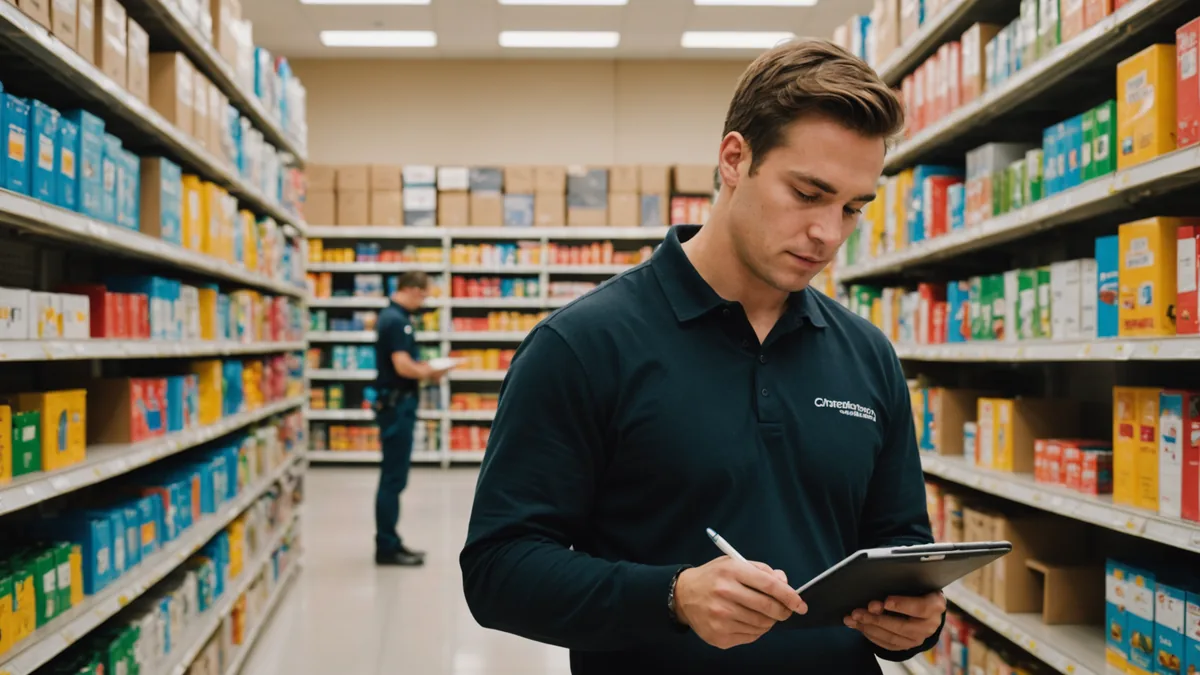
Shelf Vision vs Manual Audits: A Practical Comparison for Retail Ops
In the early-access pilot program, restock response time was 31% faster on average than each store's own pre-pilot baseline. That is the clearest practical difference between manual audits and camera analytics: an audit records a condition at a scheduled moment, while shelf intelligence can flag a condition between visits.
I have worked on both sides of this comparison. As a regional operations manager, I used audit sheets, store walks, photos, and follow-up calls to understand what was happening across multiple locations. At Youtiligent, I now work with teams onboarding store operations camera intelligence on their existing ONVIF cameras. The question is not whether one method makes the other obsolete. The useful question is where each method performs better.
The side-by-side view
| Operating dimension | Manual audits | Camera analytics |
|---|---|---|
| Coverage | Usually scheduled, sampled, and dependent on available field or store labor | Can monitor configured shelf zones repeatedly using existing ONVIF cameras |
| Latency | Findings are recorded during the visit and reviewed afterward | Zone-level alerts can surface shelf-fill, out-of-stock, and planogram conditions between visits |
| Labor cost | Requires travel, preparation, observation, documentation, and follow-up | Reduces the need for people to repeatedly check the same visible shelf conditions |
| Context | A person can ask questions, inspect adjacent areas, and understand unusual conditions | Analytics identifies visual conditions consistently, but still needs an operational response and human judgment |
| Best use | Root-cause investigation, standards coaching, and checks that require physical inspection | Frequent visibility into shelf availability, planogram compliance, and selected loss-prevention signals |
This table is not a case for removing audits. It is a case for separating observation from investigation. A retailer may not need a person physically checking every shelf condition at the same interval if a camera system can identify where attention is most likely to be needed.
1. Coverage: scheduled snapshots versus repeated visibility
Manual audits are valuable partly because they impose a routine. A store manager or regional operator walks a defined route, checks selected categories, records gaps, and follows up. The weakness is that the route is still a snapshot. A shelf can be full at 10:00 and empty at 14:00, after the audit has finished.
Coverage also narrows as the estate grows. A regional grocery, convenience, or pharmacy chain may have a clear audit standard but limited time to apply it at every location. The result is often a cadence that is sensible on paper but too infrequent for fast-moving categories. Some stores receive a detailed review, while others receive a shorter check or wait for the next regional visit.
Camera analytics changes the unit of attention. Instead of asking a person to inspect every shelf on a fixed schedule, the retailer configures relevant shelf zones and receives visibility into conditions those zones present. Youtiligent runs on existing ONVIF cameras, so the starting point is the current camera layout rather than a requirement to replace every device.
That does not mean every camera sees every shelf. Coverage depends on camera position, angle, lighting, shelf height, and obstructions. The practical task is to identify which areas are visible enough to support an alert and which still require a manual check.
2. Latency: knowing what happened versus what needs attention now
The time between a problem appearing and someone acting on it is where the operational difference becomes most visible. A manual audit can tell a manager that a product was missing during the visit. It may not show how long the gap had been present or whether the shelf was replenished shortly afterward.
Camera analytics can support alerts for shelf-fill conditions, out-of-stock signals, and planogram compliance. The alert does not restock the shelf. It shortens the path from visible condition to assigned action. A store team can check the location, confirm the issue, and decide whether the cause is backroom availability, delivery timing, misplaced inventory, or something else.
In Youtiligent's early-access pilot program, average restock response time was 31% faster than each participating store's pre-pilot baseline. The result should be read as an operational measurement, not as a promise that every store will see the same improvement. Response time still depends on staffing, inventory availability, alert routing, and whether someone owns the next step.
Manual audits remain useful for looking backward. They help establish whether a problem is recurring, whether a store is following a process, and whether a previous action was completed. Camera alerts are stronger at making the current condition visible before the next scheduled walk.
3. Labor: shifting time from searching to resolving
The labor cost of an audit is more than the minutes spent writing on a form. It includes travel between stores, preparing the route, walking aisles, photographing exceptions, entering results, discussing findings, and checking whether an action was completed. None of that makes an audit wasteful. It means the activity should be reserved for questions that need a person.
For repetitive shelf checks, camera analytics can reduce the amount of time spent searching. A regional manager can review exceptions rather than treating every shelf as equally urgent. A store team can receive a location-specific prompt instead of a general instruction to inspect an entire category.
There is a labor tradeoff during setup. Someone must define shelf zones, confirm camera views, agree on alert thresholds, and establish a response workflow. Teams also need to review alerts and tune the process. The gain comes when this setup supports a repeatable operating rhythm rather than adding another disconnected dashboard.
The 94% alert accuracy rate measured across the early-access pilot program is relevant here. Accuracy affects trust: if teams repeatedly receive alerts that do not match what they find, they will stop treating the system as a useful work queue. Even at that measured rate, people still need to verify exceptions and handle conditions the camera cannot interpret.
A regional chain scenario
Consider a 22-store regional fresh food chain in its first month of camera analytics. Before the pilot, the operations team used a weekly manual audit for selected shelf and display standards. The audit produced a useful record, but a missed replenishment between visits could remain invisible until the next review.
During the first month, the chain keeps its manual audit. It also configures visible shelf zones for high-priority products and uses camera alerts to identify potential shelf-fill and planogram issues. The regional manager does not ask stores to respond to every alert without checking. Instead, each store confirms the condition, records the reason when known, and closes the action after the shelf is addressed.
After four weeks, the chain compares results with each store's own pre-pilot baseline. The early-access pilot program measured an 18-point lift in planogram compliance over a four-week pilot window. The manager still uses store walks to inspect displays, coach teams, and investigate recurring causes. The camera layer changes the order of work: visible exceptions can be prioritized before the next scheduled audit.
This is a more realistic operating model than replacing the audit with a screen. The audit supplies context and accountability. The camera layer supplies more frequent visibility into selected conditions. Together, they can answer two different questions: what is happening now, and why does it keep happening?
Where manual audits still win
Camera analytics is shelf intelligence, not surveillance. It is useful for visual conditions that can be defined in a camera view. It does not understand every operational cause behind an empty shelf, and it cannot replace a person checking inventory records, speaking with a store associate, or inspecting a delivery discrepancy.
Manual audits are usually stronger when the task requires physical access or broad judgment. Examples include checking product dates, verifying backroom stock, reviewing damaged packaging, assessing cleanliness, confirming promotional materials, or understanding why a planogram was not followed. A person can move around an obstruction, ask a question, and connect several clues that are not visible from one camera angle.
Camera coverage also has boundaries. A blocked view, poor lighting, a changed display, or a shelf outside the configured zone can reduce the usefulness of an alert. Planogram scoring may identify that products are not arranged as expected, but it will not by itself explain whether the issue came from a late delivery, a local substitution, a fixture change, or a training gap.
There is also a risk in treating every alert as equally important. Store teams need clear priorities, reasonable thresholds, and an agreed escalation path. Without those controls, more visibility can become more noise. The operating question is not how many alerts a system can produce. It is which alerts a team can act on consistently.
How to combine the two approaches
For a regional chain, a practical rollout usually starts with a limited set of high-value zones. Choose categories where out-of-stock conditions matter, where the camera view is stable, and where a store can respond within the operating day. Define who receives the alert, what verification is required, and how closure is recorded.
Keep manual audits for work that needs human inspection. Use them to validate camera coverage, review recurring exceptions, coach store teams, and examine issues that cannot be inferred visually. Over time, the audit route can focus less on finding every basic shelf gap and more on checking causes, standards, and execution quality.
Measure the combination against the store's own baseline. Useful measures include restock response time, shelf-fill performance, planogram compliance, alert accuracy, and the proportion of alerts that lead to a confirmed action. A comparison is only useful when the chain knows what changed in its process and does not confuse more recorded activity with better store execution.
Manual audits tell you what was wrong during the visit. Camera analytics can help show what is wrong between visits. The strongest operating model uses each for the part of the job it can perform reliably, then leaves the final decision with the people responsible for the store.
If you are comparing audit coverage with camera-based shelf visibility across a regional chain, talk to the Youtiligent team.
Back to Store Ops Insights