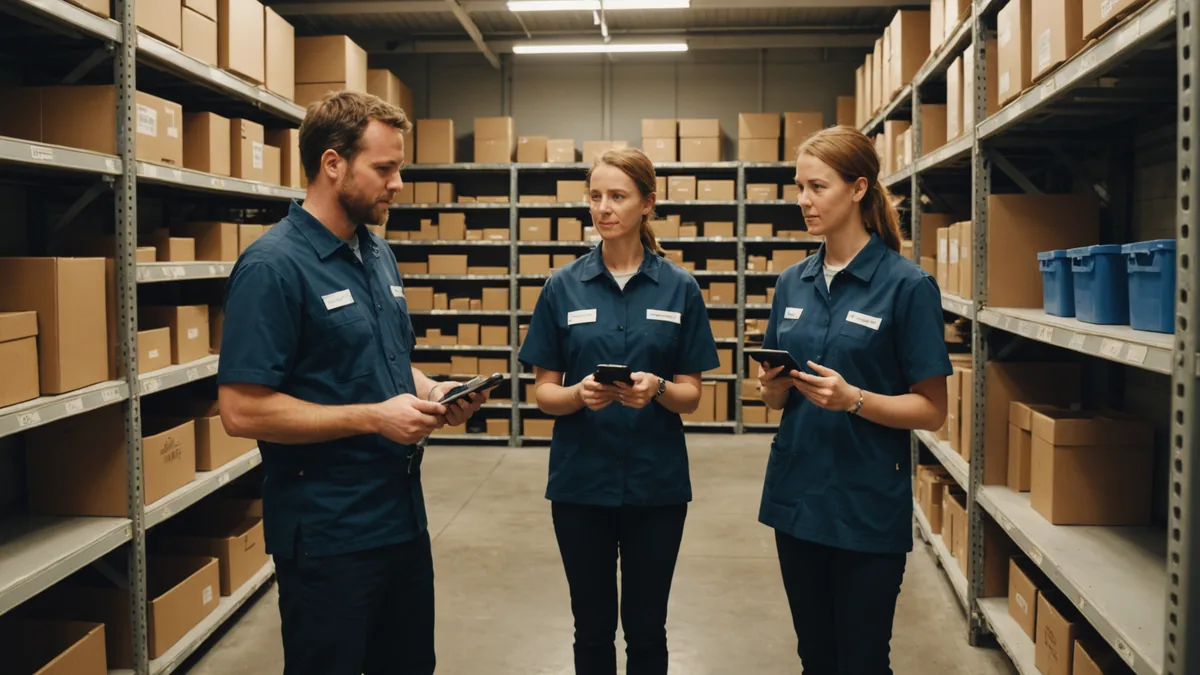
In week two of one pilot, the alert queue filled with supposed out-of-stock events before the morning delivery had even been worked. The store team was not ignoring the system. They were responding to a threshold that treated a temporarily thin shelf as a stockout. By lunch, the duty manager had stopped opening the alerts.
That moment was a useful warning. Camera analytics pilots rarely fail because the cameras cannot connect or because the detection does not work at all. More often, the operating model around the detection is unfinished. The zones are too broad, the baseline is missing, or the IT handoff ends before the store team understands what an alert requires from them.
We now structure pilots around six lessons learned from working through those problems. The point is not to make a pilot look successful in week one. The point is to make the result usable by the people who will run the stores after the pilot team leaves.
Lesson 1: Start with the store workflow, not the camera feed
The first technical task is connecting the cameras, but the first operational task is agreeing on what the store should do when a detection appears. Those are different conversations. A camera can provide a useful signal, yet that signal has no value if nobody owns the response.
With a 14-store convenience chain, we began by mapping who handled a shelf issue at different times of day. During staffed hours, the duty manager could assign a restock. During a late shift, the same alert might need to wait for the next available employee. We used that distinction to define the response path before discussing alert volume.
Our first week covers camera connection and zone setup, with baseline measurement starting immediately. We connect to existing ONVIF-compliant cameras using Profile S or Profile T. No new camera hardware is required. The important work is deciding which shelf areas are in scope, which views are reliable, and who will act on each event.
Lesson 2: Zone definition is an operations decision
A detection zone is not just a rectangle drawn over a video frame. It represents a business question. Are we measuring a single shelf, a bay, a promotional display, or an entire aisle? The wider the zone, the more difficult it becomes to explain an alert and assign a response.
At one grocery operator, a camera view covered a chilled section with several product groups. The initial zone included the whole run. An alert correctly identified that something had changed, but the employee still had to search the section to find the affected shelf. We narrowed the zones and aligned them with the way the replenishment team already walked the store.
This also exposed a common handoff problem. IT had completed the camera connection and considered the setup finished. The operations team had not yet reviewed the zones or confirmed that the views matched the physical layout. We now include store operations in zone review before alert delivery begins. If the person responsible for the shelf cannot recognize the area from the event, the zone is not ready.
Lesson 3: Threshold calibration needs live feedback
Thresholds should be treated as working settings, not permanent technical choices. The right level depends on shelf presentation, camera angle, replenishment routines, lighting, and how long a temporary gap should remain before it becomes an actionable condition.
In weeks two and three, alert delivery is active. This is when the team adjusts thresholds and logs the first compliance scores. We ask store staff to classify events as useful, premature, or incorrect. That feedback is more valuable than a long meeting about theoretical accuracy because it shows how the alert behaves during deliveries, rush periods, and ordinary shelf recovery.
For the convenience chain, the initial threshold was too sensitive around a high-turnover beverage shelf. Staff were already checking that shelf frequently, so the extra alerts created noise without changing behavior. We raised the threshold for that zone, kept a lower threshold for a slower-moving category, and reviewed the results again several days later.
The goal is not to eliminate every false positive. That is not realistic in a live store. The goal is to make the remaining alerts clear enough that staff trust the queue and can tell when a response is worthwhile.
Lesson 4: Build the baseline before you discuss improvement
A pilot without a baseline produces attractive anecdotes and weak evidence. Before the first alert is delivered, we define what will be measured, how it will be measured, and which comparison period is fair for that store.
For a fresh food chain, the starting point included restock response time, planogram compliance, and the results of manual counts used to check alert accuracy. We did not assume that every location began at the same level. Each store was measured against its own baseline, because a store with strong compliance has a different improvement opportunity from one that is regularly missing shelf standards.
Our four-week review looks at the change in restock response time, the lift in planogram compliance, and alert accuracy against manual count. In the early-access pilot cohort, the average results were a 31% faster restock response time, an 18-point planogram compliance lift over the four-week window, and a 94% alert accuracy rate. Those figures are useful only because the measurement definitions were agreed before the pilot started.
We set the measurement framework before day one so nobody is guessing at the end. That also makes it easier to explain a mixed result. A store may improve response time while seeing limited compliance movement because staff are still changing how they face products or record exceptions.
Lesson 5: Staff behavior is part of the pilot
Camera analytics can identify a condition, but it cannot decide how a particular store should organize its work. It cannot restock a shelf, resolve a delivery discrepancy, or choose whether a manager should interrupt another task. Those decisions remain with the store team.
The ops director at a fresh food chain learned this during the first alert review. The team had asked employees to respond immediately to every event, which sounded reasonable but did not match the store’s morning workload. Staff began postponing the alert queue rather than prioritizing it. We changed the instruction to group events by department and review them at two defined points during the busiest shift.
That adjustment was not a failure of the detection. It was a reminder that new information changes work patterns. A pilot needs a short briefing, a named owner, and a way for staff to report confusing events. Without those steps, teams may develop informal workarounds that hide whether the system is helping.
This is also where the IT-to-operations handoff matters most. IT can confirm that the connection is active and that video frames are processed locally, with only detection events and metadata leaving the network. Operations still needs to understand what the event means, when it should be acted on, and how exceptions will be handled.
Lesson 6: Review the result as an operating decision
The final review should not be a presentation of charts followed by a vague question about rollout. It should answer a more practical set of questions: Which alerts changed behavior? Which zones need adjustment? What work did the store stop doing manually? Where did staff still need another process?
In week four, we review the restock response time delta, the planogram compliance lift, and alert accuracy against manual count. We also look at the exceptions. A high accuracy rate can still conceal a poor experience if alerts arrive at the wrong time or do not identify a location clearly enough for the responding employee.
One grocery operator had a positive compliance result but did not want to expand every alert type at once. The review showed that shelf compliance events were useful, while a broader set of loss-detection patterns needed more observation before being added to the daily routine. That was the right decision for that store. A pilot should identify where the operating case is strong, not force every available detection into the first rollout.
For us, production readiness means the store team can explain the alert, the manager can assign the response, and the measurement owner can show what changed from the baseline. The camera count matters less than whether those three pieces are in place.
A practical starting point
Before you start a pilot, the measurement design matters more than the camera count. Define the baseline, the response owner, the zones, the threshold review schedule, and the decision you will make at the end. If you want to talk through how we structure ours, reach out at [email protected].
Back to Store Ops Insights