

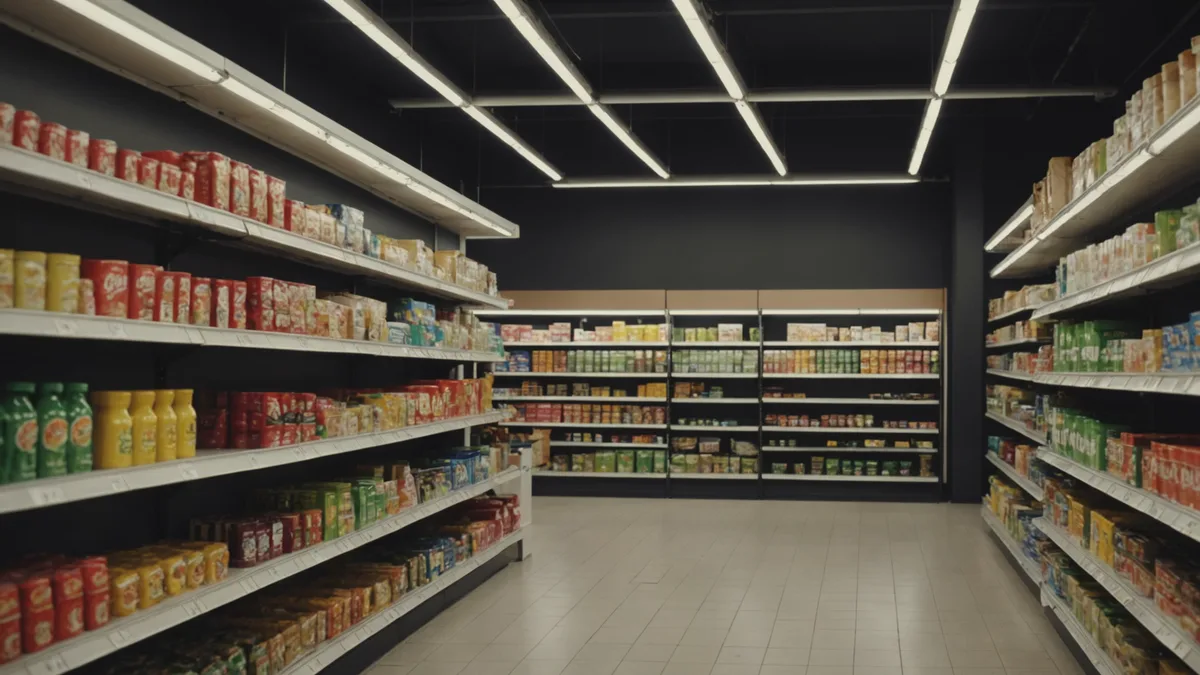
An empty shelf does not appear in the P&L as a loss. It appears as a lower sales figure for a section that seemed to have weak demand. Industry estimates commonly place in-store stockout cost at around 4 percent of annual sales. For a 15-store regional grocery chain, that is not a rounding error. It is a real dollar amount, much of it unmeasured because the register never records what was not sold.
Why Stockouts Resist Measurement
A stockout never appears directly on the P&L. When a customer sees an empty shelf, no transaction records whether they substitute, abandon the item, or leave the store. The register cannot show the loss. Available indicators are indirect: category sales below the expected run rate, margin dilution when customers choose lower-margin substitutes, occasional complaints, and periodic walkthroughs that reveal an empty bay.
POS data records purchases, not unmet demand. A store that runs out of a beverage at 11am on a Saturday and replenishes it at 3pm has missed four hours of sales during one of the week's busiest periods. POS reports show the day's beverage sales, but without a baseline they cannot identify the amount lost. Most chain reporting does not produce that baseline systematically.
This measurement gap matters because the 4 percent figure, even if directionally accurate, is an estimate for the chain overall rather than a measured result at store or SKU level. Some stores may perform much worse or much better. Certain categories are almost certainly more affected than others. Without a view of shelf conditions, the chain cannot determine where intervention would produce the greatest impact.
Anatomy of a Typical Stockout
Knowing why a shelf becomes empty helps determine the appropriate response. Three separate mechanisms are involved, and each calls for a different remedy.
Replenishment timing failures are the most common. The product is in the backroom, but it has not reached the sales floor. The order cycle was right and the shipment arrived, yet the move from backroom to shelf was too slow. For high-velocity SKUs during busy periods, a delay of a few hours can create a stockout even when inventory is still in the building. This is a staffing and process issue, not an inventory issue.
Ordering cycle failures form the second category. The product was ordered in too small a quantity, or the order-point trigger came too late, leaving the backroom empty before the next delivery. In that situation, floor replenishment cannot happen because there is no product available. The options are an emergency order, a substitute, or accepting the empty shelf until the next scheduled delivery.
Phantom inventory is the third and most difficult mechanism. The system reports stock on hand, so no reorder occurs, yet the product is absent from the shelf or cannot be found. The gap between system and physical inventory grows through receiving errors, shrinkage, manual count errors, and products placed in the wrong location. It is difficult to eliminate completely, though a well-managed chain should keep its occurrence relatively low.
Where Costs Accumulate
The 4 percent aggregate estimate hides concentration. Stockout costs are not evenly distributed across the assortment. They cluster in fast-moving, high-margin categories with little tolerance for substitution.
Take a beverage aisle in a mid-sized grocery store. The fastest 20 percent of SKUs account for a disproportionate share of category sales. When those items disappear during peak hours, the revenue loss is amplified because shoppers often do not trade down within the category. They may buy nothing or purchase from a competitor on their next visit. The effect reaches beyond the missed transaction.
A stockout in a slow-moving specialty category during off-peak hours has much less effect. The customer may return or look online, and competitive pressure is lower. Revenue at risk for each hour of empty shelf time is far smaller.
This concentration has a practical implication: a restock alerting system does not need simultaneous coverage of every item to capture much of the value. Focusing on high-velocity, high-margin bays during peak trading hours, supported by rapid response protocols, recovers most of the stockout cost that can be recovered.
What Camera Shelf Monitoring Changes
The main operational change is response speed. An alert issued within minutes of a shelf becoming empty gives staff time to respond before substantial trading time is lost. In our pilot operations, average time from alert to shelf service was under 20 minutes when alerts were correctly routed to floor staff. The comparison is not with eliminating stockouts altogether. It is with leaving the shelf empty until the next scheduled replenishment or until a manager notices it during a walkthrough.
At a high-traffic bay on a Saturday morning, a 20-minute stockout versus a two-hour stockout produces a measurable difference in lost transactions. We do not have statistically validated revenue recovery figures to publish from our early-access data at this stage. We can report that shorter stockout windows correlate with higher category sales rates on monitoring-covered bays compared with pre-monitoring baselines at the same stores.
The second change is visibility. When an operations director can see how many bays across all 15 stores are below the fill threshold at any moment, they gain a real-time view of aggregate stockout exposure that was previously unavailable. That view affects staffing, scheduling, and replenishment decisions. It also adds store-level accountability: managers aware that shelf conditions are tracked continuously are more likely to ensure prompt restock responses.
What It Does Not Solve
Shelf monitoring detects stockout events after they begin. It cannot prevent upstream disruptions that deplete the stock room before the shelf. The detection layer sits at the last step; earlier events are out of scope. It directly addresses replenishment timing failure and can flag phantom inventory when the system shows product in a bay but the camera repeatedly detects low fill. It cannot fix a backroom shortage because an alert cannot create inventory that has not arrived.
The 4 percent stockout cost estimate covers all three mechanisms. Camera-based detection addresses the first most directly and offers partial signals for the third. The second, a genuine inventory shortage before delivery, requires better ordering and forecasting systems. These are separate problems requiring separate solutions.
A realistic expectation for a well-implemented shelf-state monitoring program is recovery of some replenishment timing losses, specifically those caused by slow response rather than missing inventory. In a chain where response failures drive most in-store stockouts, the recovery can be significant. Where ordering cycle failures dominate, monitoring is a useful diagnostic but not the main remedy.