

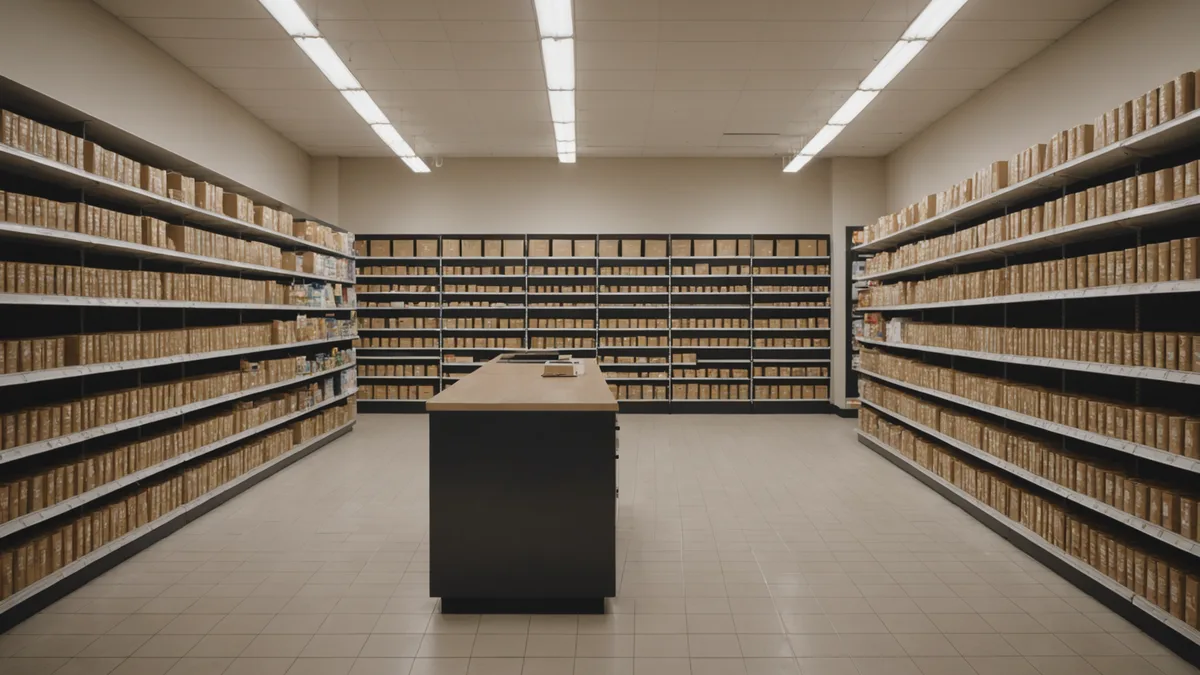
A 14-location grocery chain in central Poland or a 20-store pharmacy group in the Galilee still faces the same three daily problems that disrupted operations in 2020: shelves empty between replenishment cycles, products leaving the store, and staff unable to cover every zone at once. That remains true despite the annual stream of announcements about self-checkout, frictionless stores, and RFID rollouts.
I want to be direct about what has truly changed since then and what has not. At Youtiligent, that distinction matters because we chose to address persistent operating problems, not topics that simply make strong press releases.
What really changed
Camera hardware became substantially better while also becoming more affordable. Five years ago, a regional chain installing cameras in 2018 or 2019 usually had 1080p fixed-angle units with mediocre low-light performance. Today, the same category offers 2K or 4K, improved sensors, and much lower per-unit costs. Older systems once considered "good enough for incident recording" are now replaced through normal capital cycles, and the new hardware can support computer vision inference at the frame level.
Edge compute also passed a practical threshold. Local inference on the store network once needed dedicated GPU hardware that was costly or power-hungry. Current edge inference appliances fit in a standard 1U rack slot, use power comparable to a network switch, and process multiple camera feeds at once. For a regional chain, video can stay inside the store, removing bandwidth costs and the data-sovereignty concern that previously stopped projects in procurement review.
Alert delivery became easier. Five years ago, the missing last ten meters was getting a camera insight to a floor employee in a form they would use. In 2025, WhatsApp and SMS provide that path through tools staff already use on devices they already carry. There is no new hardware, app, or training. That simple change made operational camera analytics practical for more regional operators.
What stayed the same
The economics of out-of-stocks remain unchanged. Industry estimates consistently place in-store stockout rates between 5 and 10 percent of SKUs at any given time in typical grocery and personal care categories. The result is a lost sale and often a lost basket, since a customer missing one item may abandon the trip. These figures have not meaningfully improved in a decade. Chains know stockouts occur, but their feedback loops are too slow to stop them at the shelf.
Manual work still leads the process. Most regional chains we speak with use scheduled walks for replenishment: an employee checks assigned aisles at set times and flags visible gaps. The model is slow, scales poorly under headcount pressure, and breaks down during peak periods when staff move to registers and service counters. The walk is missed, the aisle remains unchecked, and the stockout continues until a complaint or the next scheduled check.
Loss prevention remains reactive. Cameras record to the DVR, and footage is reviewed after something happens. That model has lasted twenty years and still dominates at the vast majority of regional chains. Proactive detection, which flags behavioral patterns as they occur rather than afterward, remains early outside large-format national chains.
At most chains below 50 locations, display compliance is still self-reported. Regional managers make periodic visits, staff complete forms, and promotional planograms are checked a few times per season rather than continuously. The difference between the planogram and the shelf grows over time, then gets fixed when someone walks the zone and compares them.
The important gap: inference, not hardware
The camera hardware transition has moved faster than the operational software meant to use it. Most chains have upgraded or are upgrading to modern IP systems with ONVIF compatibility. Those cameras can support live computer vision inference, yet their default role remains unchanged: record, store, and review only when necessary.
This is the specific problem we are solving. A camera can identify what is happening in an aisle right now, but that information matters only if something processes it and sends it to someone who can act. In most stores, nothing does. The footage is present. The inference is not.
We are not saying every camera installation should become an analytics platform overnight. The stores that succeed are those with a defined operational priority: stockouts in categories that cost real money, shrink concentrated in identifiable zones, or display compliance tied directly to promotional revenue. Applying inference to those specific questions is a tractable project. Treating the effort as a general surveillance upgrade with vague benefits is not.
What regional operators need from this technology
We speak with operations managers at chains between 8 and 40 stores. The consistent pattern is clear: they do not want a dashboard or weekly reports. They want existing staff to act on the right information sooner, without adding headcount or a manual monitoring burden.
That distinction should guide how any operational camera system is assessed. The key question is not "what does this show me?" but "what will my staff do differently today?" Alerts that people ignore do not constitute a working system. A specific alert routed to the right person at the moment of the problem does.
Five years from now, physical retail will still face stockouts, shrink, and display drift. Chains that close the feedback loop on all three using cameras they already have will hold a meaningful efficiency advantage over those relying on scheduled walks and reactive loss prevention. That change is not five years away. The hardware is already there. The issue is what runs on top of it.