

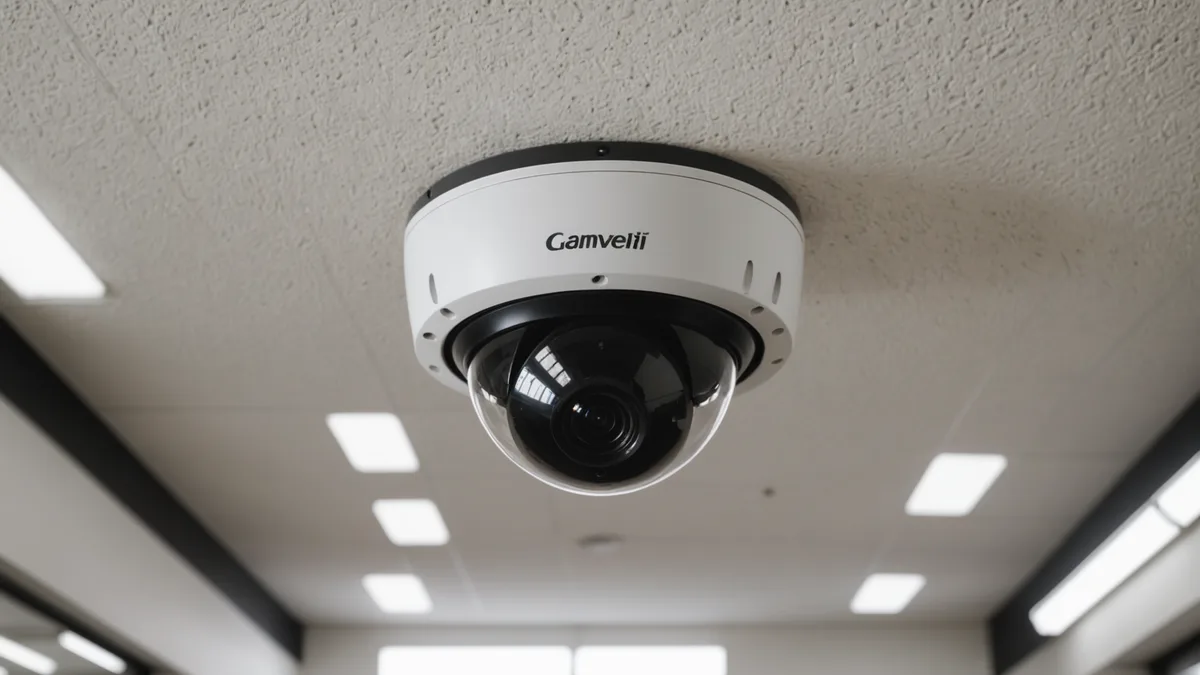
Shrink discovered in an inventory count did not happen last week. It happened earlier. With recording-only cameras, footage stays on a hard drive until a loss is found, then gets reviewed to confirm what happened, without helping prevent the next incident. Active detection changes that calculus, though adoption has been slow and uneven.
The Passive Recording Gap
Most retail cameras installed over the past decade had one main purpose: recording video for review after an incident. That supports insurance claims, police reports, and internal investigations. It does not help stop the incident before it occurs.
For passive recording to help, several steps are required. An incident happens. Someone detects the loss, generally through an inventory count or staff report. A time window is established. Someone reviews the footage frame by frame or at accelerated speed. If quality, camera angle, and lighting are adequate, useful evidence emerges. The process takes hours, depends on capable review, and produces information about an event that is already over.
Passive recording also creates a workload issue for a regional chain's loss-prevention team. Investigations require dedicated time from a qualified reviewer. In a chain with 15 or 20 stores, that person is based at headquarters rather than every store. Each request means arranging remote access to the correct DVR or NVR, retrieving the relevant time window, and checking potentially several camera angles. Each investigation is slow and costly.
What Active Detection Means
With active detection, the camera feed is analyzed in real time, producing an alert or structured signal instead of only a recording. It indicates that something matching a concerning pattern occurred at a particular place and time. That message can reach a responder within minutes, rather than after the next inventory count.
Several detection categories should be distinguished. Item removal detection is the most specific, flagging product taken from a shelf without a nearby matching scan. Zone dwell detection spots unusual activity around high-value or high-theft areas. Tailgating detection at controlled entrances identifies access irregularities. Each relies on a different inference method and carries its own false-positive profile.
For shelf-level loss prevention in standard grocery or convenience stores, item removal detection is the closest fit. The model assesses visual cues including product displacement, no scan during the relevant timeframe, and context such as posture and movement that separates concealment from ordinary browsing. Achieving low false-positive rates on real store footage required substantial work. Lighting, shopping carts, and legitimate restocking all create signals that must be filtered.
What Works at Scale and What Is Maturing
This is where we aim for honesty rather than promotion. At the store-level detail regional chains need, some active detection functions are dependable today. Others are not.
Shelf-state change detection is dependable: determining that product was present at timestamp A and absent at timestamp B is a solved problem with commercially available accuracy. Paired with POS exception reporting, it offers a credible signal for high-frequency items in well-lit stores with fixed-angle cameras.
Linking actors to events is legally constrained. Detection identifies activity patterns associated with loss, but not intent. Footage of a pattern is not prosecutorial-grade evidence. These are operational, not investigative, tools. Their value lies in deterrence and pattern detection, not case files.
Behavior prediction, or labeling someone a likely theft risk from signals before any theft occurs, is the least dependable and most problematic use. Its false-positive rate can create serious operational and legal exposure. We do not build or deploy it, and we caution operators about vendors promising confident individual-level behavioral prediction.
The Deterrence Effect
Active detection has another underrecognized benefit: deterrence. Visible camera coverage already discourages some activity, which is one reason stores install cameras. Active detection extends that effect by creating the impression, and the reality, that cameras do more than record.
In our pilot stores, we observed that floor-staff responses to alerts, even without confrontation or prevention of a particular event, alter repeat-incident patterns at flagged locations. When staff visibly respond to alerts at an end-cap or shelf bay, alerts from that location tend to decline over a two-to-four week period. We do not claim causation from limited pilot data, but the pattern is consistent enough to merit attention.
Integration With Current LP Programs
Active detection does not substitute for a loss-prevention program. It adds information for the person managing that program. At a regional chain, that is typically the operations director, store managers, and sometimes a contracted LP consultancy serving higher-risk stores.
The integration question chains ask most often is where alerts are sent. The answer follows the staffing model. Where a security officer works on the floor, alerts go directly to that person. Without dedicated security staff, alerts generally reach the shift manager through the same channel used for restock and compliance alerts. The aim is actionable information for the right person in the right format, not another standalone LP software silo.
This is why the camera-as-operations-platform view matters. A camera system used only for loss prevention is single-purpose, making its cost difficult for smaller chains to justify. When the same infrastructure also produces restock alerts, display compliance signals, and staffing visibility, the economics shift. LP becomes one part of a multi-function investment instead of requiring separate justification.
What Regional Chains Should Expect From Honest Vendors
Vendors offering active detection should provide false-positive rates for your specific store environment, not just a controlled demo. The difference between demo and live-store performance is real, shaped by lighting variation, camera placement, and format differences that demonstrations cannot reproduce.
They should explain what the detection model does and does not do. Detecting item removal from a specific location is not the same claim as detecting concealment intent. The first is achievable with current technology at reasonable accuracy. The second is not reliable enough for operational use without significant collateral impact on customer experience.
The move from recording to detection is real and worth pursuing. Its honest scope is narrower than some vendor presentations imply, but within that scope it creates value passive recording never could.