

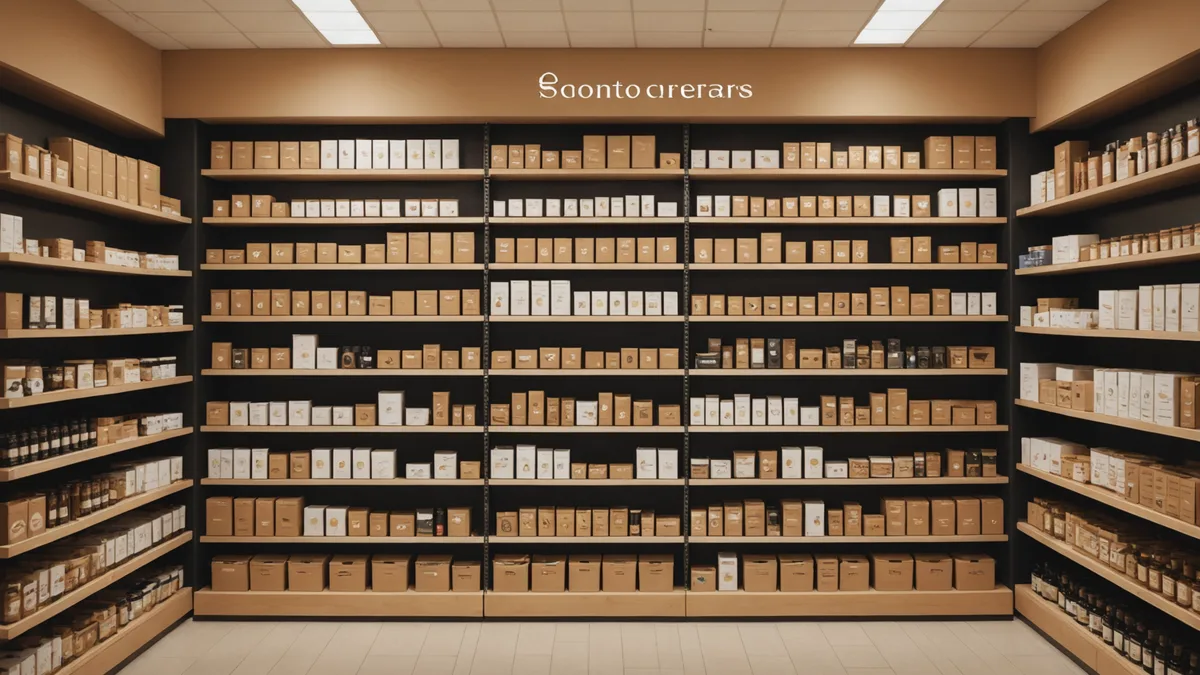
A promotional display that falls to half-depth by Tuesday afternoon will not appear in post-event sales reports as a compliance failure. Every chain issues placement instructions, but few can consistently see whether stores follow them.
What Planogram Compliance Means
A planogram specifies which product belongs in each location, with what facing count and orientation. It captures decisions from category managers and often supplier field teams that pay for preferred placement. When the shelf matches it, the underlying assumptions hold. When it does not, results become unpredictable, and most chains do not track the difference precisely enough to measure it.
Compliance is not simply binary. A facing can be correct yet collapsed to one deep instead of three. A product can occupy the right bay but sit two slots left of its intended position after hurried restocking. A promotional display can be correct Monday morning, then deteriorate through the week as shoppers disturb it and nobody resets it. Each is a compliance failure, but each has different sales effects and remediation times.
The Plan and the Shelf
For operators, the key issue is not whether compliance matters in theory, but how far the average store is from the plan. Published industry research indicates that a meaningful share of shelf positions, often cited between 25 and 40 percent, differs from planogram intent at any given time. Results vary by category, day of week, and traffic pattern, making these figures directional rather than targets.
Research consistently finds a directional link between display accuracy and category sales. Controlled store-level CPG studies, which deliberately varied facing counts and position accuracy across matched stores, routinely found category sales differences of 5 to 15 percent between high-compliance and low-compliance conditions. The range depends greatly on category, competitive set, and how much shoppers use shelf position as a decision cue.
The sales lift from compliance is not always dramatic. In staple commodity categories with low substitution risk, the link is muted. In impulse categories, beverages, snacks, and seasonal items, it is stronger because the shopper's decision is shaped largely by what is visible and where it appears.
Why Compliance Slips
Understanding that compliance affects sales does not ensure that it will be maintained. Shelves drift from planograms for structural reasons, including in well-run stores.
Promotions are the most frequent disruption. A supplier runs an off-shelf promotion that temporarily takes facing space from a core display. Once it ends, the reset is rarely as precise as the initial setup. Products return roughly to place, but accuracy declines. After three or four promotional cycles, the shelf may look little like the original planogram.
Replenishment pressure creates further drift. Staff working quickly restock from what is available in the back room rather than from the planogram. When a variant is out of stock, neighboring facings expand into the visual gap. That is rational store operations behavior, but it weakens the intended display structure.
Staff turnover worsens both issues. An experienced associate has an internal map of where products belong. A new hire does not, and a planogram printed on paper or buried in a back-room binder offers little help during a restock cycle.
Detection Challenge
Most chains use periodic store audits to manage compliance, with district managers conducting walkthroughs or supplier field reps reviewing their categories. Both approaches share a structural weakness: they are episodic. An audit records the shelf's condition when someone visits. Everything between visits remains unseen.
For a chain with 15 or 20 stores and one district manager, a meaningful weekly walkthrough of every store is not feasible. At best, the manager reaches each location every two or three weeks. Supplier reps inspect their category, not the entire store. The resulting compliance view is always partial and outdated.
Camera-based display monitoring addresses this gap. Existing shelf cameras, including those installed for security, can run inference against planogram templates and flag deviations in near-real time. Detection shifts from periodic to continuous, while labor cost does not rise with the number of bays monitored.
What Continuous Monitoring Changes
The operational benefit is faster response. If a promotional display collapses at 11am on a Tuesday, a staff member can restore it by noon. Without continuous monitoring, it might remain degraded until Thursday's walkthrough. Across two days in a mid-traffic store and fast-moving category, the sales difference is measurable.
In our early-access pilots, stores reduced their average compliance deviation window from several days to under four hours. The display did not change, and neither did the planogram. The difference was that the deviation became visible and actionable sooner.
Continuous tracking also has a secondary effect: when staff know display compliance is monitored, adherence during restocking tends to improve. This is not punitive surveillance. Visibility creates accountability, much like any operational metric. A manager can show the district manager a compliance trend instead of only the last walkthrough's snapshot.
Limits of the Approach
Compliance monitoring shows what is on the shelf. It cannot verify whether the planogram itself is commercially correct, or fix the logistics and staffing constraints that created the gap. A well-executed bad planogram is still bad. Assessing the plan requires category management expertise, consumer data, and supplier input.
Monitoring also does not replace an experienced district manager or category manager's judgment. It surfaces the issues they need to see, while the response remains a human decision: should this deviation be fixed today, or wait for the next reset cycle? Is the supplier's planogram workable in this store's fixture configuration?
It puts those decisions before the right people at the right time, rather than weeks later, after the opportunity cost has already been paid.